
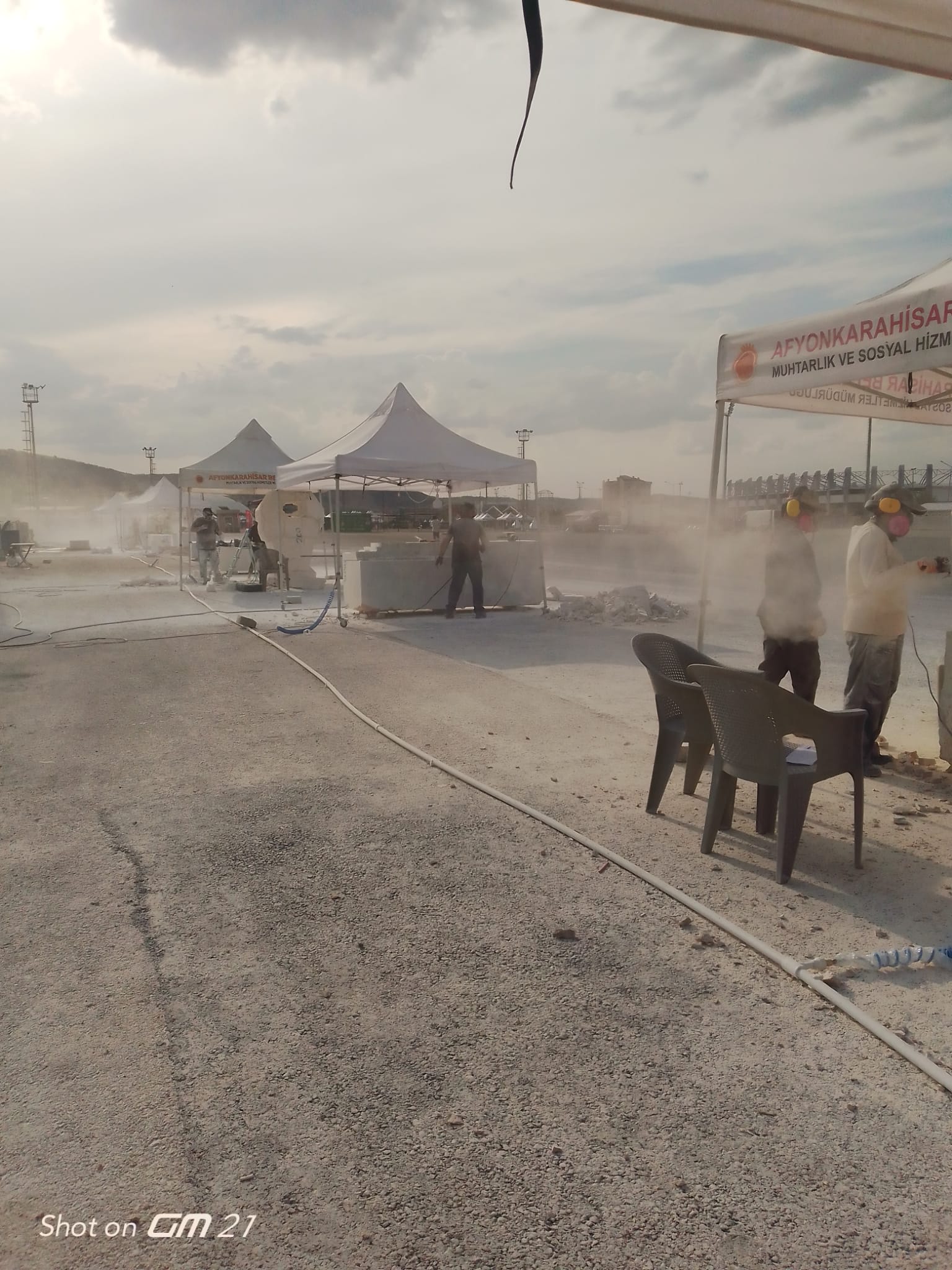
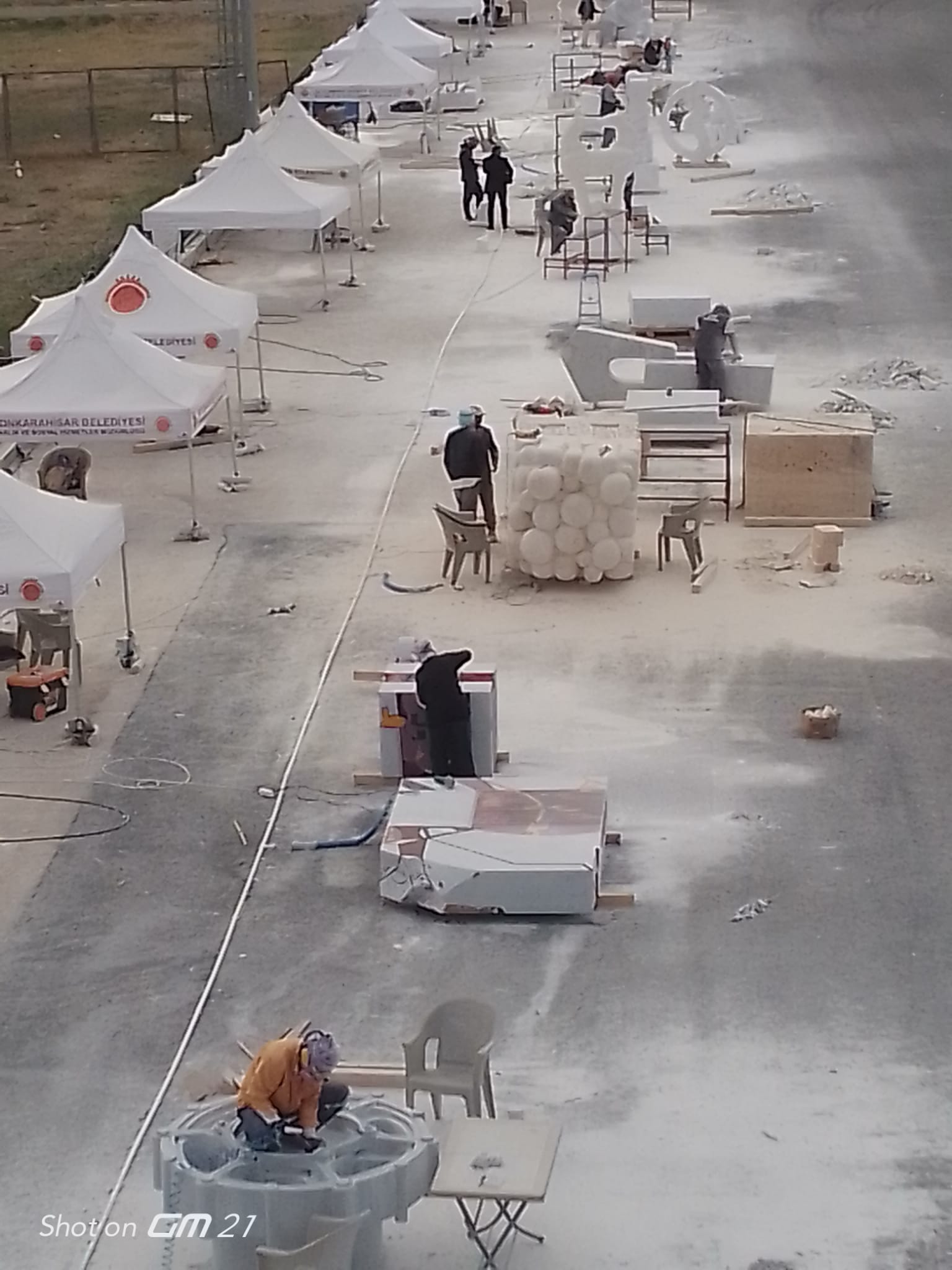
Organised by Afyonkarahisar Municipality and the City Council Culture and Arts Working Group, the symposium brought together ten sculptors from five countries — Japan, Georgia, India, Costa Rica, Poland and Turkey — to work with one of the world's most celebrated white marbles: Afyon taşı. C4CCI joined the project as the symposium's international partner, connecting the event to a wider global audience through London-based cultural production and the Art X Space platform.
Taking place from 10 September to 10 October 2025 in a city renowned as the heart of marble craftsmanship and the land where the Turkish Republic was won, the symposium created a space for dialogue between diverse sculptural traditions — from classical figurative carving to abstract geometric form, from ancient healing traditions to contemporary social commentary.
"Marble carries within it a silence that the sculptor must learn to hear before the first cut is made."
— Curatorial Note, C4CCI Art X SpaceEach participating artist was selected through a rigorous juried process. Their proposals reflect both personal artistic vision and a shared engagement with Afyonkarahisar's geography, history and material heritage. The resulting works will form a permanent public collection in the city.
Born 1969, Yokohama. Graduated and completed his MA in Sculpture at Tokyo University of the Arts (1995–1997). Has participated in international symposia across Japan, Turkey, China, South Korea, Germany, Italy, France, Israel, Argentina, Brazil, New Zealand and Oman. His works explore nature, balance and human relationships through the language of stone, marble and metal.
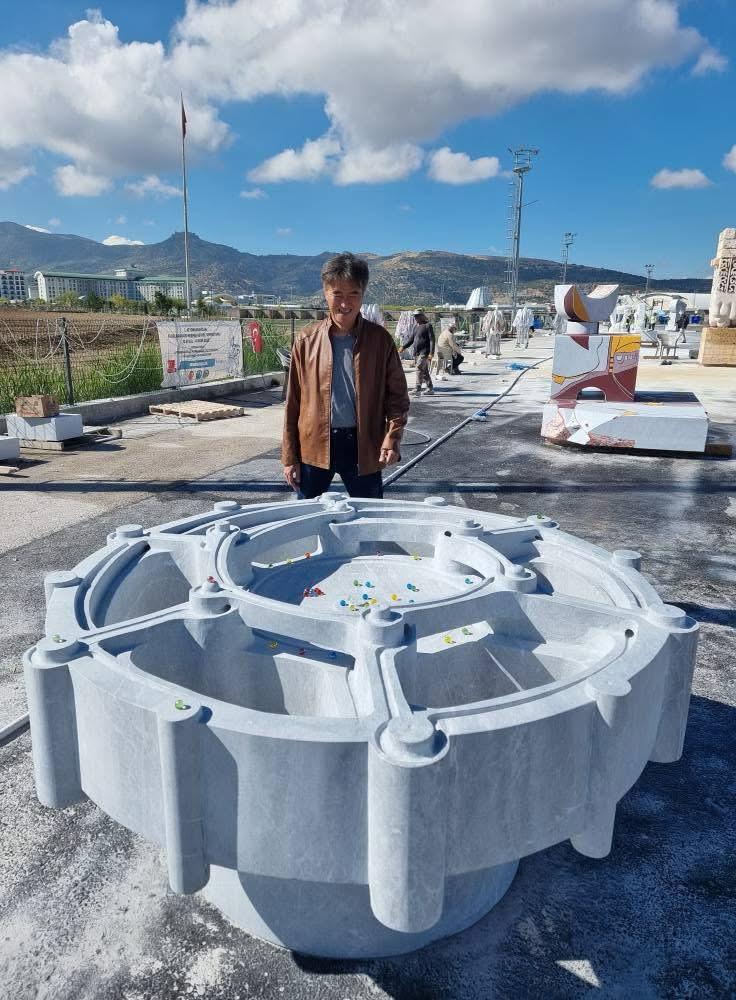
"This is a sculpture of six people rolling marbles together — each with a single purpose: to enjoy themselves with mutual respect. Tomorrow will always be better than today. Tomorrow will always be by your side."
As the world grows ever more divided, Asakawa's work offers a quiet but persistent invitation: that understanding and respecting one another's differences remains both possible and necessary. His sculpture captures joy as a form of solidarity.
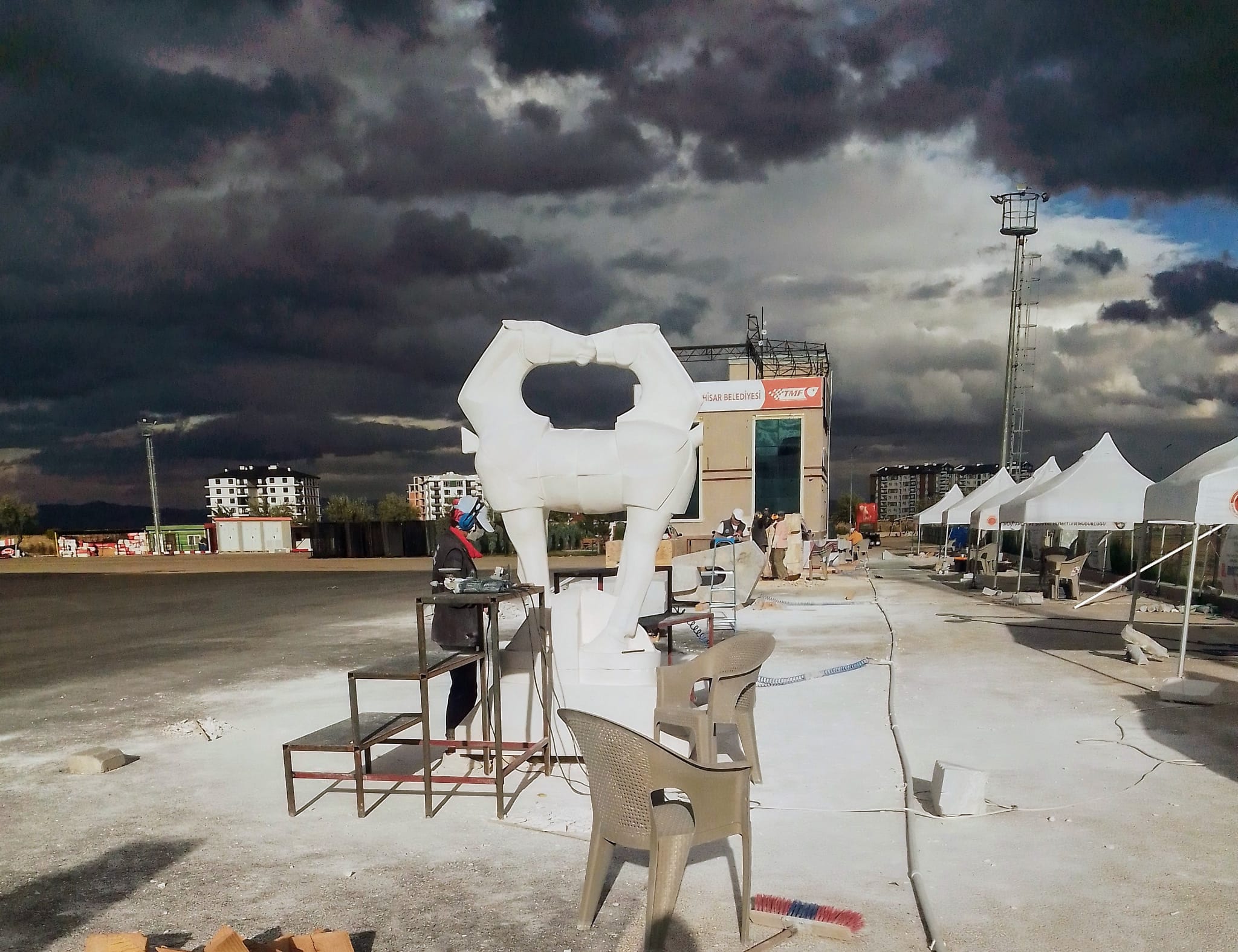
Trained at Tbilisi State Art Academy, graduating in 1985, with postgraduate study at the All-Union Art Academy (1989–1991). Served as professor there until 2012. Author of major monuments across Georgia including the Abkhazia War Memorial (Kutaisi, 1996) and the statue of King Tamar (Akhaltsikhe, 1998). Has participated in over 55 international sculpture symposia across Georgia, Turkey, Greece, Israel, China, Egypt, Spain, France, Hungary and Bulgaria.
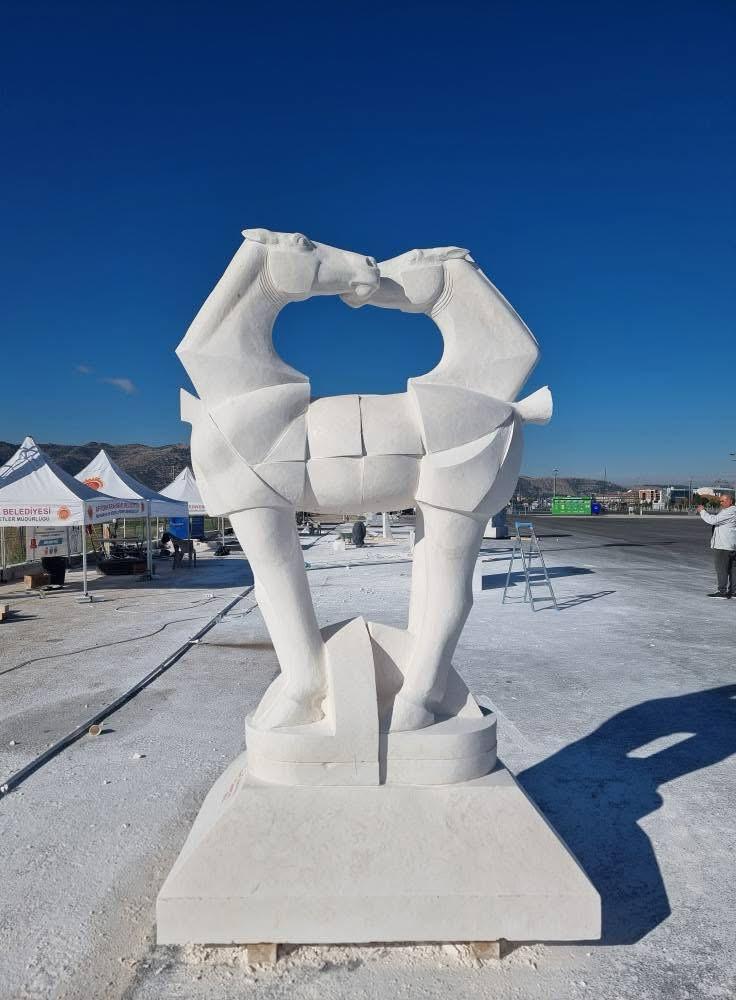
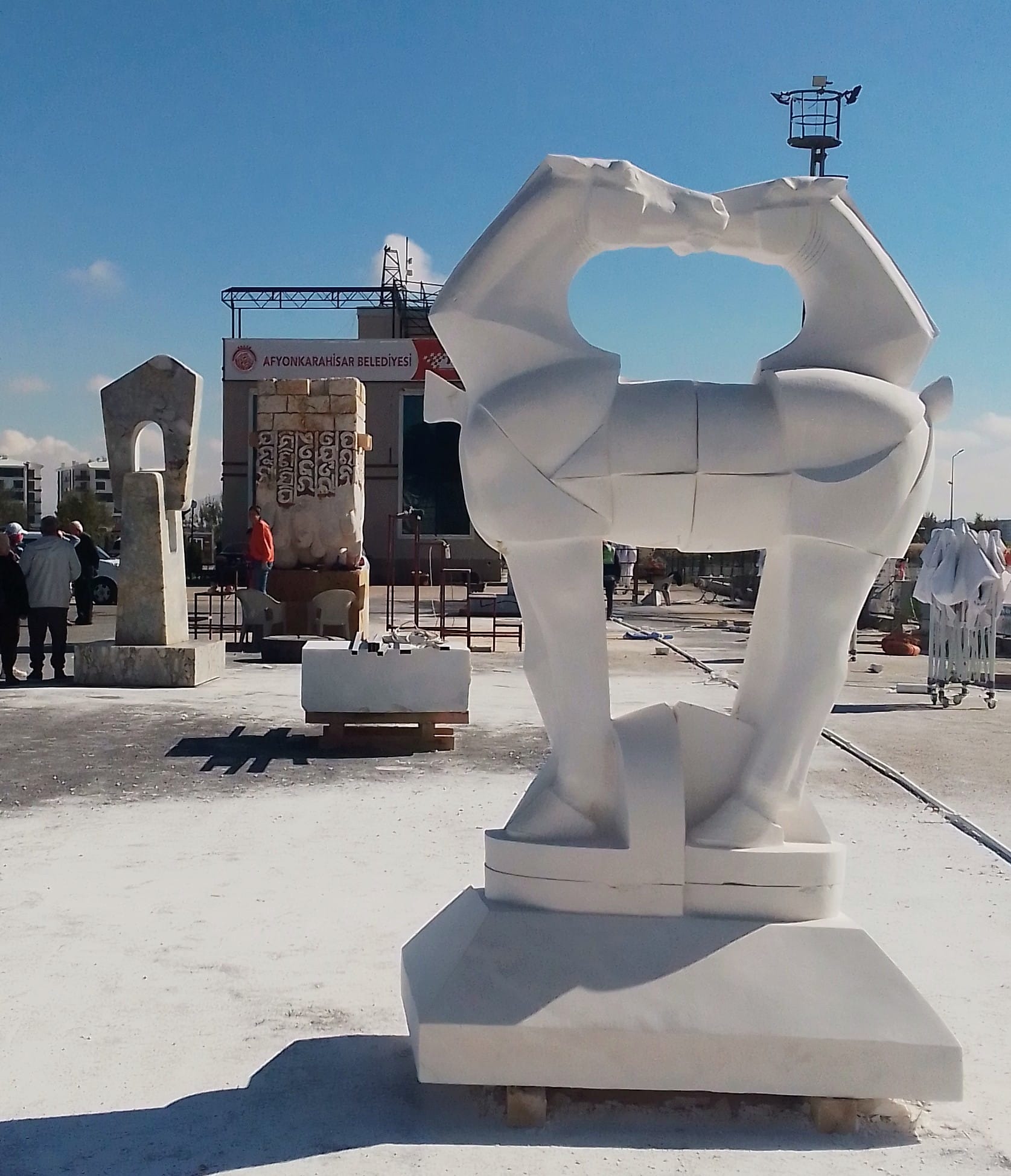
"Two stylised horses — bodies symmetrically interlocked — form a single, unified silhouette. Their high heads inclined toward one another evoke communication, love and mutual understanding."
The absence of separation between the two figures evokes a profound sense of unity and solidarity. The mirrored forms emphasise harmonious togetherness over individuality — a dynamic composition built on balance and interconnection.
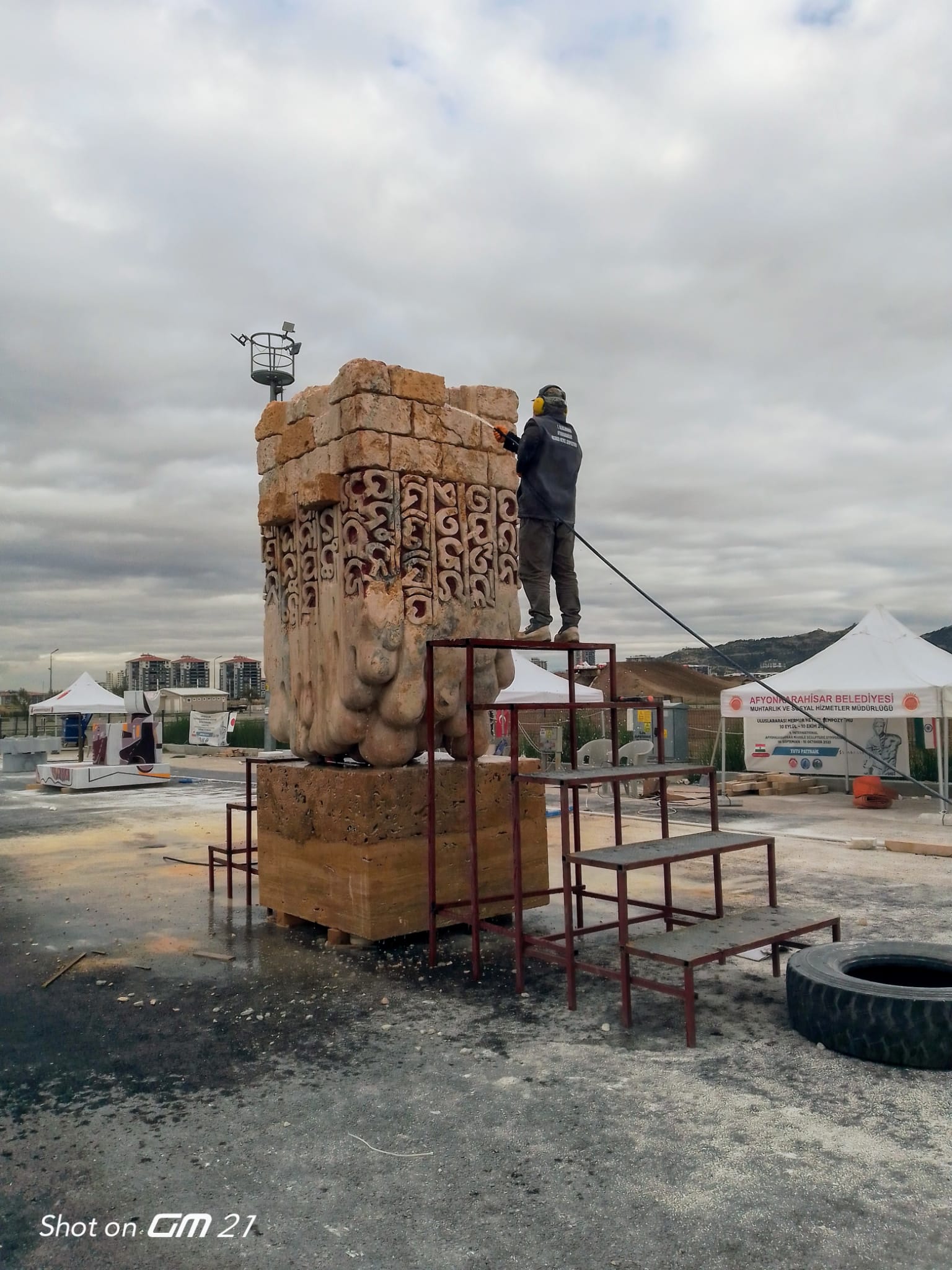
Born 1963, Bhubaneswar. Gold medallist from Banaras Hindu University (1988), MA from Delhi University College of Art (1990). Has participated in symposia across France, Germany, Russia, China, Romania, Portugal, Egypt, Turkey, Nepal, Oman and Uzbekistan. His work draws on India's ancient sculptural traditions — from rock shelters and temples to tribal artefacts and totem poles — as a foundation for a deeply personal universal language.
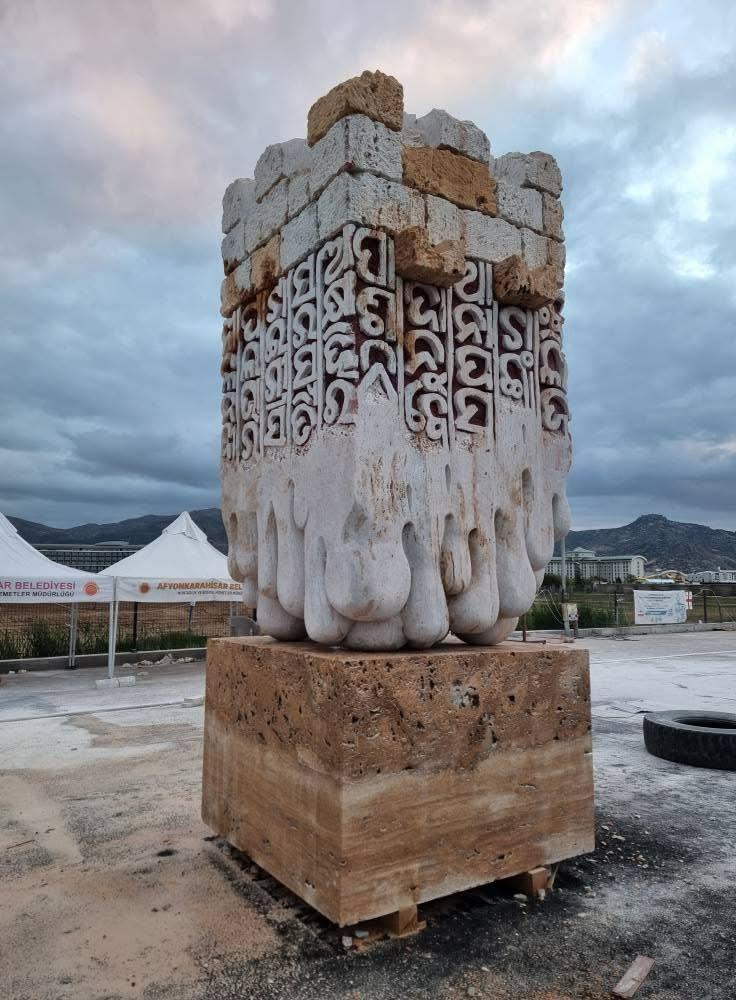
"I always love to carve with the fragrance of my soil — this is my ultimate identity in the international art arena."
Drawing on visual memories of antique classical sculptures, temples, icons, lintels and the rich remains of world ancient history, Pattnaik's work reflects a sculptor who has never lost connection to the earth from which his practice grows. His deep engagement with myth, ethics and cultural heritage produces works of enduring resonance.
Born 1953, Nicoya. Introduced to creativity through toys he made from materials gathered in the surrounding nature. Wood, stone, marble and metal became the languages of a practice rooted in an ethical relationship with the natural world — he never felled a tree, giving new life instead to fallen hardwoods including cocobolo, ronbon, cenizaro and guanacaste. His sculptures carry the dignity of labour, the continuity of nature and the joy of human existence.
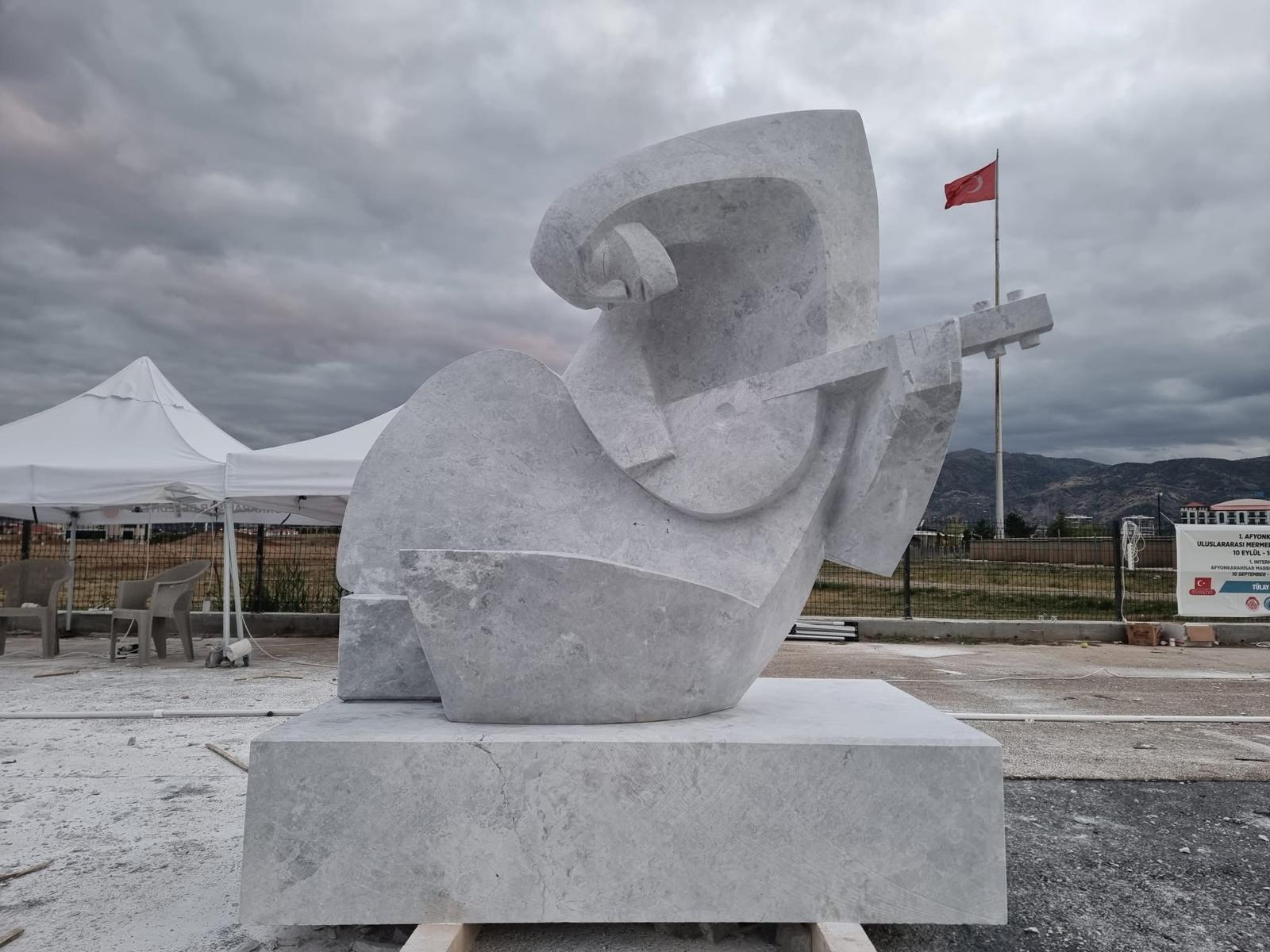
"Designed to evoke images and forms emerging from a musical instrument under moonlight. Gently reproduced shapes and lines suggest a soft nocturnal melody."
Jiménez's work functions as a silent poem rooted in the land, open to the universal. His sculptures breathe the continuity of nature and resonate with deep ecological sensitivity — each a dialogue between material and memory, between Costa Rican roots and a shared human feeling.
Born 1970, Belarus. Trained at the Khlebau Art College, Minsk and Belarus State Art Academy. Member of artists' unions in Belarus, Poland, Canada and Uzbekistan since 1999. Permanent works in public spaces across Turkey, China, France, Canada, Israel, Italy, India, Iran, Egypt, Morocco, Japan and Brazil. Winner of the Bienal del Chaco (Argentina) and Li Kaigu Award (China). Works held in the Belarus Museum of Contemporary Art, Pedvale Open-Air Museum (Latvia) and Shanxi Provincial Art Museum (China).
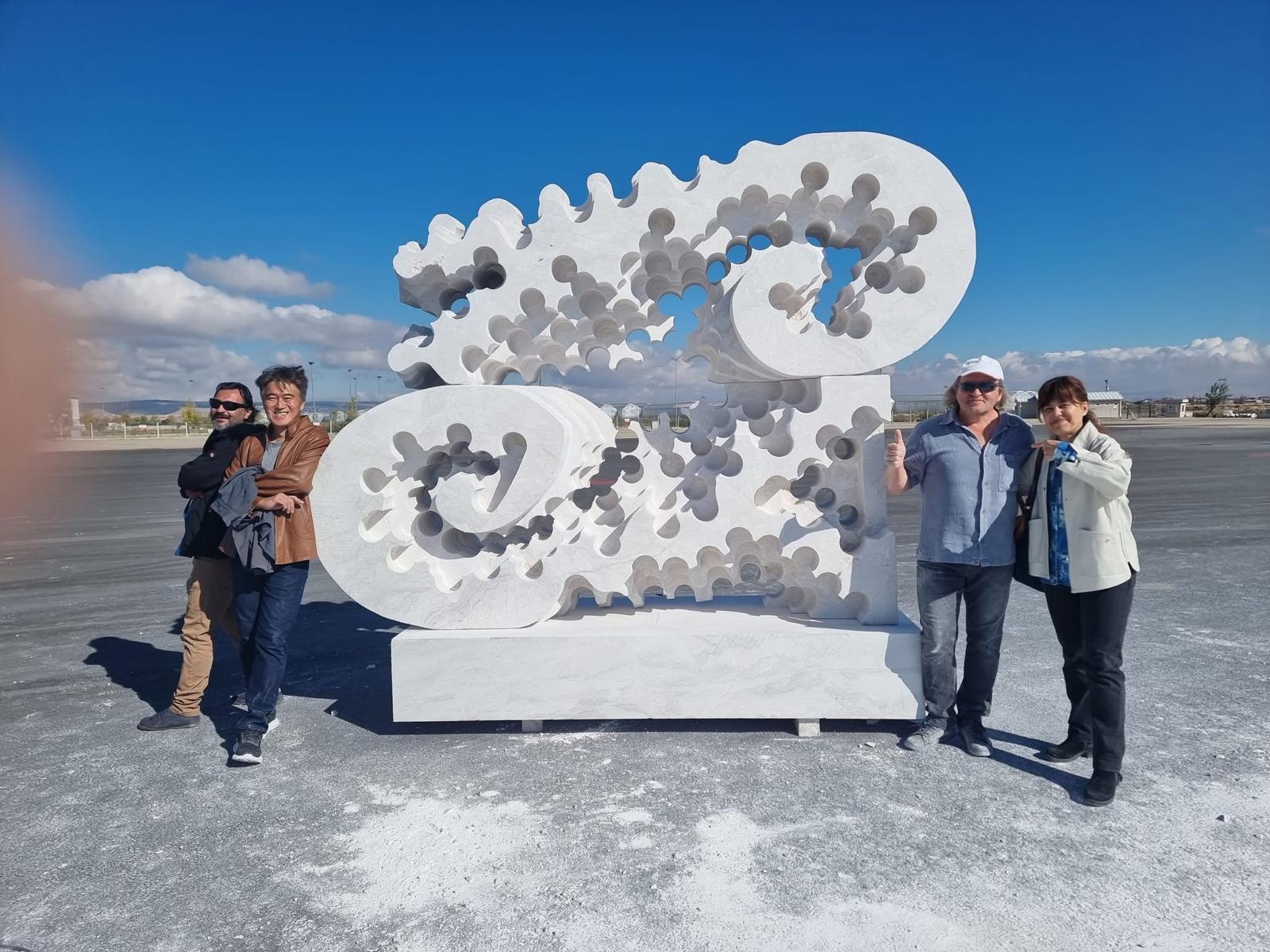
"Inner Impulse. All movement begins from within — it is the force of thought. Though the composition appears still, light creates an ambiguous play of volume within it, producing movement."
The form becomes more aerial, loses its mass and flows toward depth, the universe — nourished by the energy of space and light. Kopacz's work inhabits the threshold between stillness and motion, between the tangible and the infinite.
Born 1982, İskenderun. BA from Atatürk University, MA from Gazi University, PhD from Ankara Hacı Bayram Veli University. Research assistant at Gazi and Ankara HBV Universities (2011–2020). Currently lecturer at Malatya Turgut Özal University, Department of Art, Design and Architecture (2020–present). Continues to investigate the relationship between art, space and collective memory through national and international exhibitions, symposia and workshops.
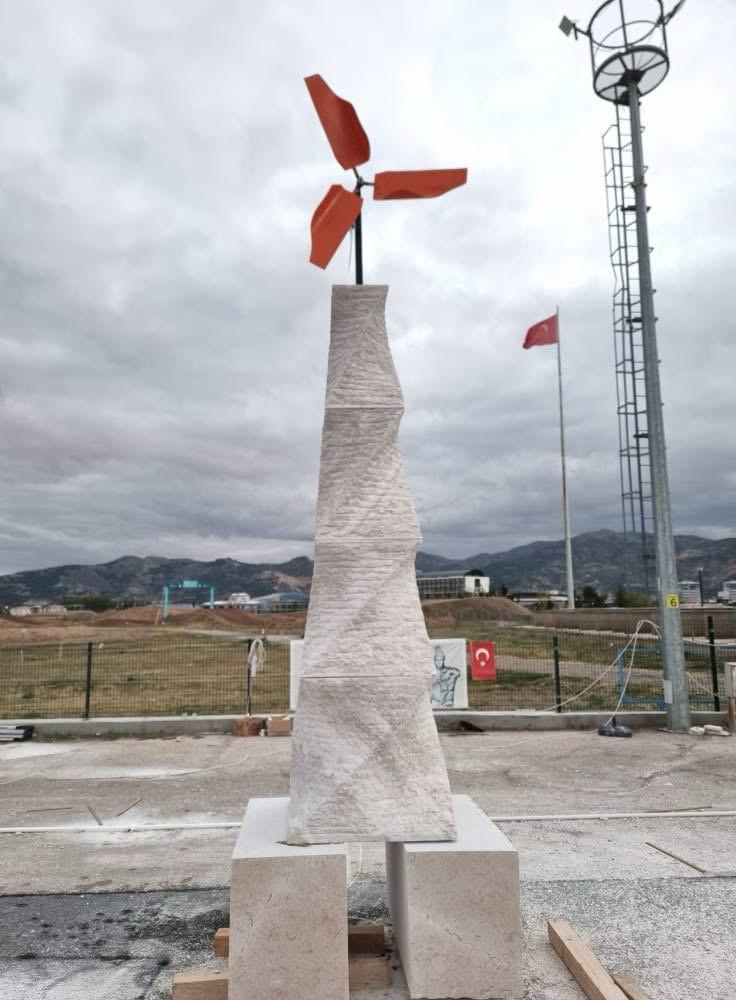
"The upward curling form symbolises the transformations, breaking points and processes of reshaping encountered on life's journey. Spiral movement is based on the idea that life progresses not linearly, but cyclically."
White marble recalls the pure essence that persists through change. The work emphasises the courage to break from stagnation and rebuild oneself — an individual journey that simultaneously carries collective memory. Transformation, the work insists, is the inescapable condition of existence.
Born 1975, Istanbul. Graduated from Mimar Sinan University of Fine Arts, Sculpture Department (2003), with specialist training at the Accademia di Belle Arti di Carrara, Italy (2012–13). Since 2002 has participated in national and international sculpture symposia, biennials and exhibitions across Turkey, Italy, France, the Netherlands, Spain, Canada, Argentina, China, Israel, Iran, Egypt, Uzbekistan and Oman. Monumental stone sculptures are held in permanent collections across multiple geographies. Works from her studio on Burgazada.
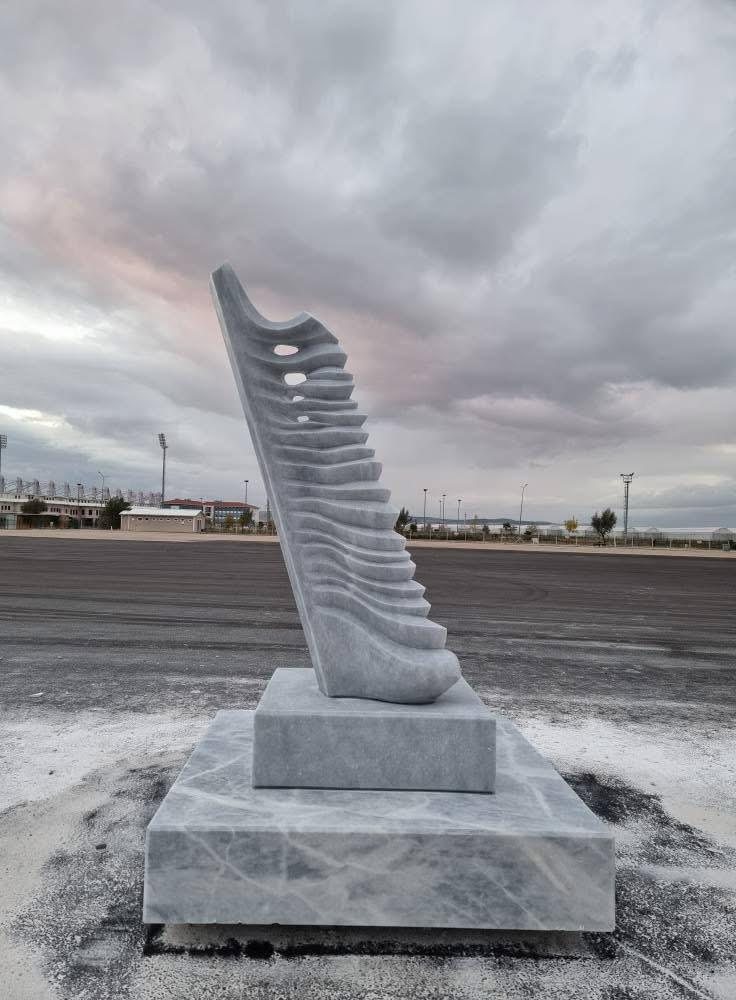
"A pyramidal form rising skyward represents the future, technology and urbanisation. An organic form attached to it represents nature and cultural heritage. Together they symbolise the harmonious relationship between city and nature."
The dynamic, upward-moving sculptural form symbolises the future of humanity's harmonious relationship with its planet. Akıncı's practice brings the sculptor's intuitive approach into dialogue with the material's inherent resistance — creating works of timeless, universal expression.
Born 1979, Çorum. BA from Erciyes University, MA and Proficiency in Art from Dokuz Eylül University. Studied at the Accademia di Belle Arti di Catania, Italy (2010). Visiting scholar at the University of Gloucestershire, Media Art and Technology (2015–16). Currently Associate Professor and Head of Sculpture, Akdeniz University Faculty of Fine Arts. Academic work focuses on cultural memory, identity, gender and interdisciplinary approaches, published internationally.
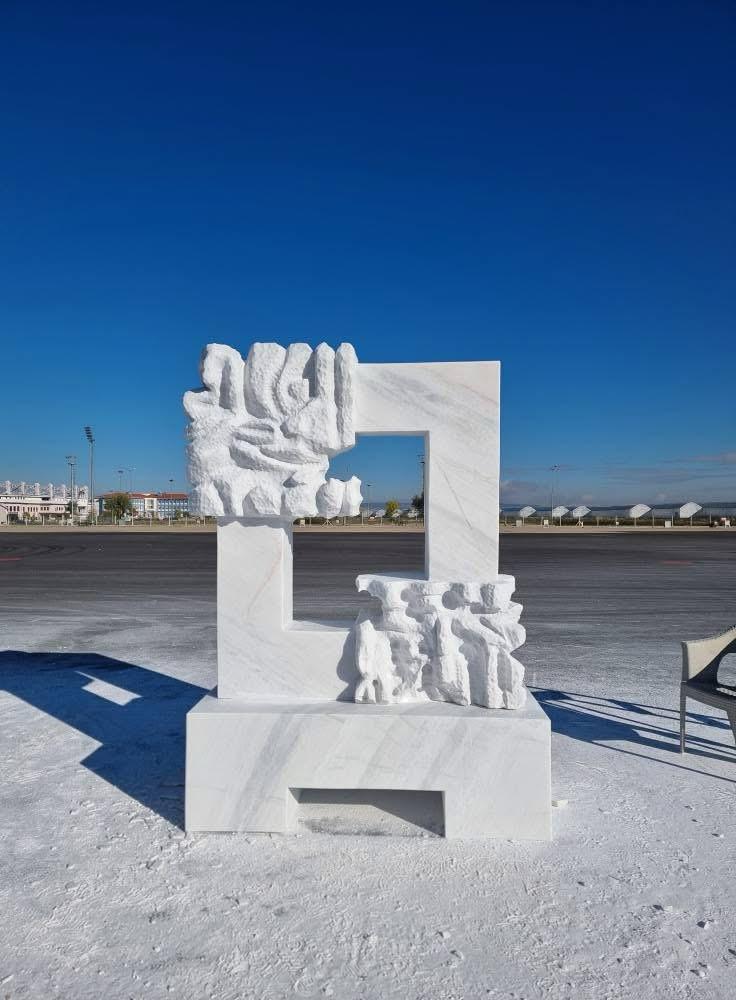
"The geometric frame represents the marble as it emerges from the quarry — untouched, raw, pure. The organic forms that break free from within are the essence of the stone: frozen movement, the spirit awakened by the sculptor's touch."
Öz is above all an act of homage to the material itself — Afyon marble. It captures that precise threshold moment where raw matter becomes art, where the silence of stone finds its voice. The work tells the story of the marble, not the geography that surrounds it.
Born 1972, Şenkaya. First in his faculty at Atatürk University (2004); MA 2011, Proficiency in Art (Plastic Arts) 2022. Faculty member at Atatürk University Fine Arts Faculty, Sculpture Department, and Coordinator for Intellectual Property Rights. Academic focus on cultural memory, social phenomena, ecology, sculpture and interdisciplinary art practices. Has worked in snow, ice, stone and metal across numerous national and international symposia, workshops and exhibitions.
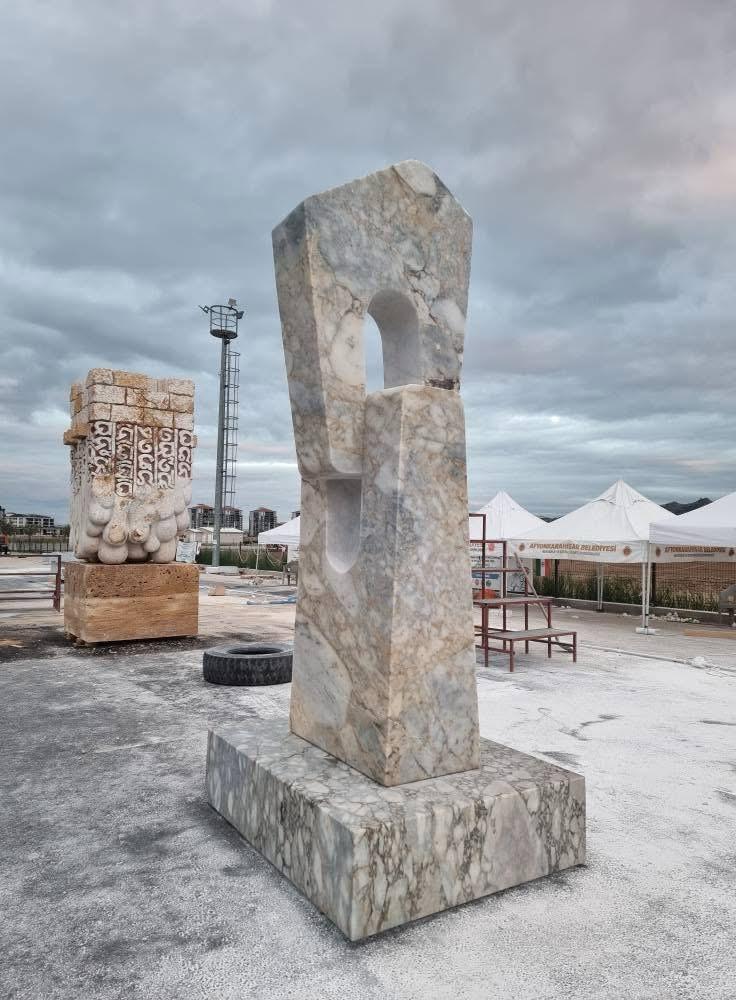
"Two separate forms carved from a single marble block — an aesthetic monument to social peace and the coexistence of friendship and fraternity. From every angle, the work evokes unity."
Rising from Afyonkarahisar's deep history and from the enduring power of marble, the sculpture draws on the intersection of human labour and natural force. Like the mountains of Afyon — like the mountains where the Republic was won — it stands upright, determined and lasting.
Born 1968, Ankara. Graduated first in class from Hacettepe University Fine Arts Faculty, Sculpture (1991); MA and Proficiency in Art from the same institution. Research assistant at Hacettepe 1994–1999. Retired from Mersin University Fine Arts Faculty (2022). Has exhibited in France, Romania, Bahrain, Azerbaijan, Egypt, Albania and Uzbekistan, with major symposia across Mersin, Malatya, Düzce, İzmit, Bursa and Ankara. Three state sculpture competition achievement awards; 'Most Praiseworthy Young Artist' from Ankara Arts Council.
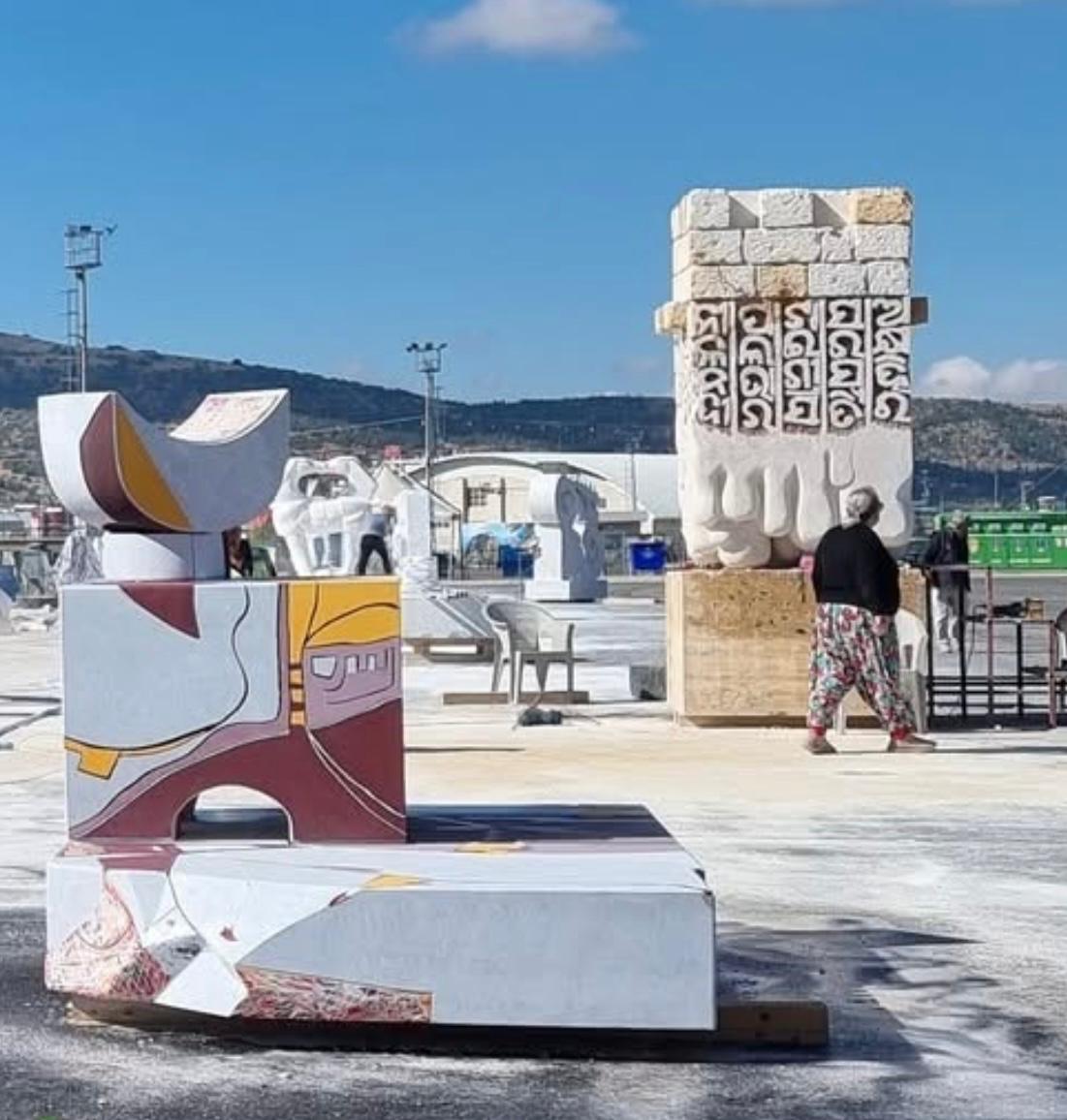
"The forms created with colour and pattern are my personal approach: colour is not merely the act of painting stone, but a form in itself — as in painting. The transformation of marble from hard matter into sculpture is a gesture returned from nature to nature, a gift re-offered to humanity."
A horizontal composition of three separate blocks joined by pins, Karacan's work carries the discipline into interdisciplinary territory: traditional stone carving combined with pattern and warm colour that speaks of daily rhythm, inner freedom and the surprising joy of encountering a gift. Sculpture as gesture; transformation as dialogue.
C4CCI Art X Space is accepting applications for its 2026 exhibition and residency programme. Solo shows, group exhibitions and international collaborations — no submission fee.